


ESOP IPO Preparation

Prepare your equity, policies & people for the public markets​

Listing your company on NSE/BSE is a major milestone, but it also brings increased regulatory scrutiny, tighter governance standards, and higher stakeholder expectations. Qapita helps you make your ESOP framework IPO-ready by ensuring clean and auditable equity records, SEBI-compliant policies, structured documentation, and strong insider controls, so your equity stack is fully prepared for DRHP filing, due diligence, and a smooth day-one listing on the exchange.​
blue bg
G2 Grid® for Equity Management Software | Summer 2025

Recognized as a Global Leader on G2

We are ranked the best in Customer Satisfaction, Enterprise and Mid-Market.

Get your company IPO ready with clarity, compliance and control with Qapita​

Get IPO ready from the start​

Prepare your ESOP framework early with a clean equity structure built for public markets. Qapita helps you review historical grants, identify gaps, and align plans with IPO requirements so your cap table, policies, and records are structured correctly well before DRHP filing.​

Scale with public market complexity​

As you move closer to an IPO, equity operations become more complex across employees, promoters, and advisors. Qapita supports ESOP restructuring, policy updates, approvals, and stakeholder coordination with clear workflows that keep boards, legal teams, and leadership aligned.​

Stay SEBI compliant and diligence ready​

From disclosures to audits, Qapita ensures your ESOP data is accurate, traceable, and compliant with SEBI regulations. Maintain audit-ready records, controlled access, and complete documentation so you can respond confidently to due diligence at every stage of the IPO journey.​

How Qapita helps you prepare for IPO​

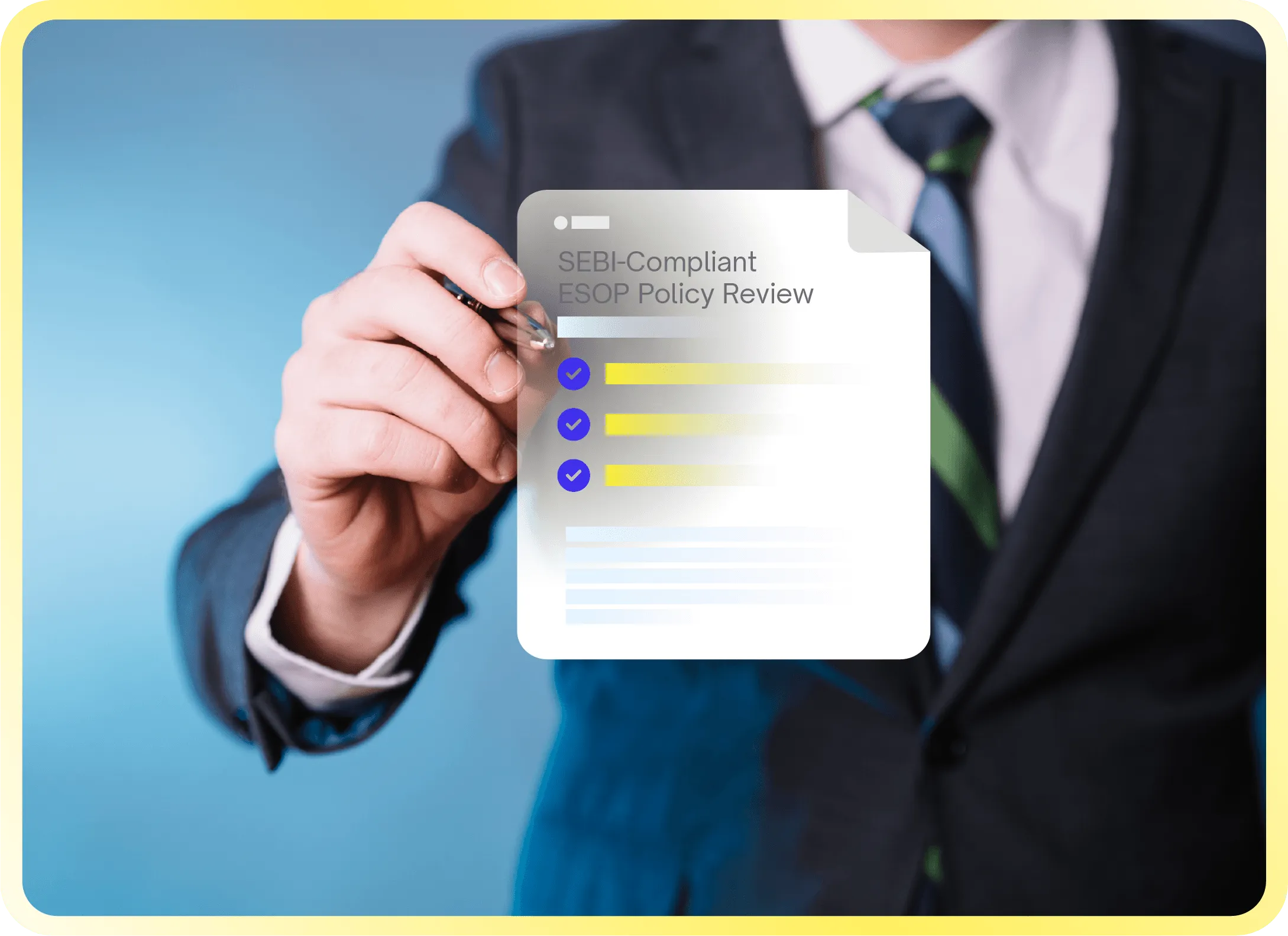
SEBI-Compliant ESOP Policy Review

Align your scheme with SEBI regulations​

We evaluate your current ESOP/SAR/phantom plans against SEBI’s listing regulations and LODR guidelines. If changes are needed to eligibility, vesting, trust structure, or disclosures, we help you revise the policy, draft resolutions, and secure approvals on time.​
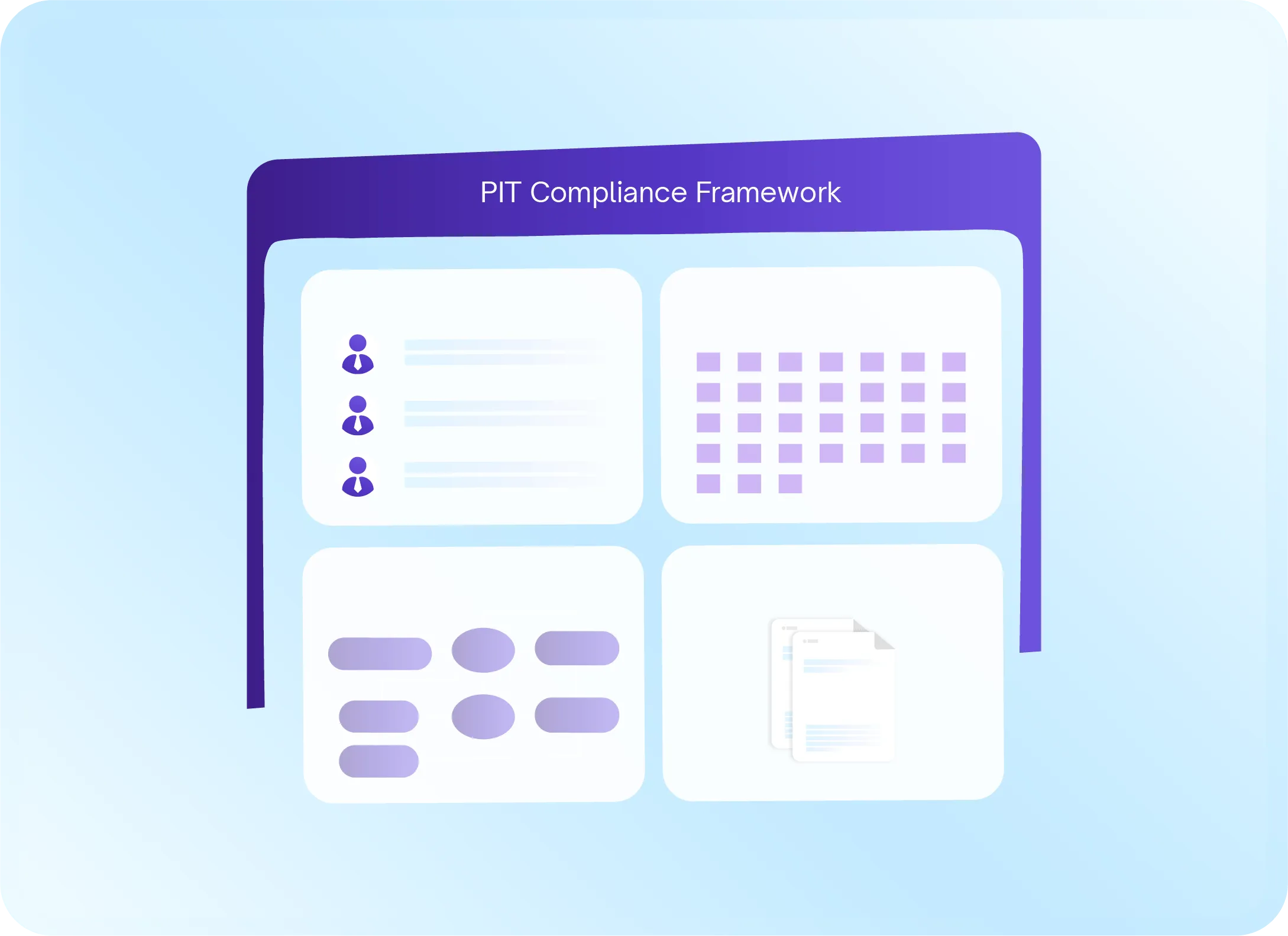
Insider Trading & Designated Person Framework

Get PIT ready, down to the last detail​

Public companies must comply with SEBI’s (PIT) Regulations. Qapita helps you identify designated persons (DPs), set up trading window controls, configure pre-clearance workflows, and roll out internal codes of conduct. Everything’s documented, digitized, and regulator-ready.​
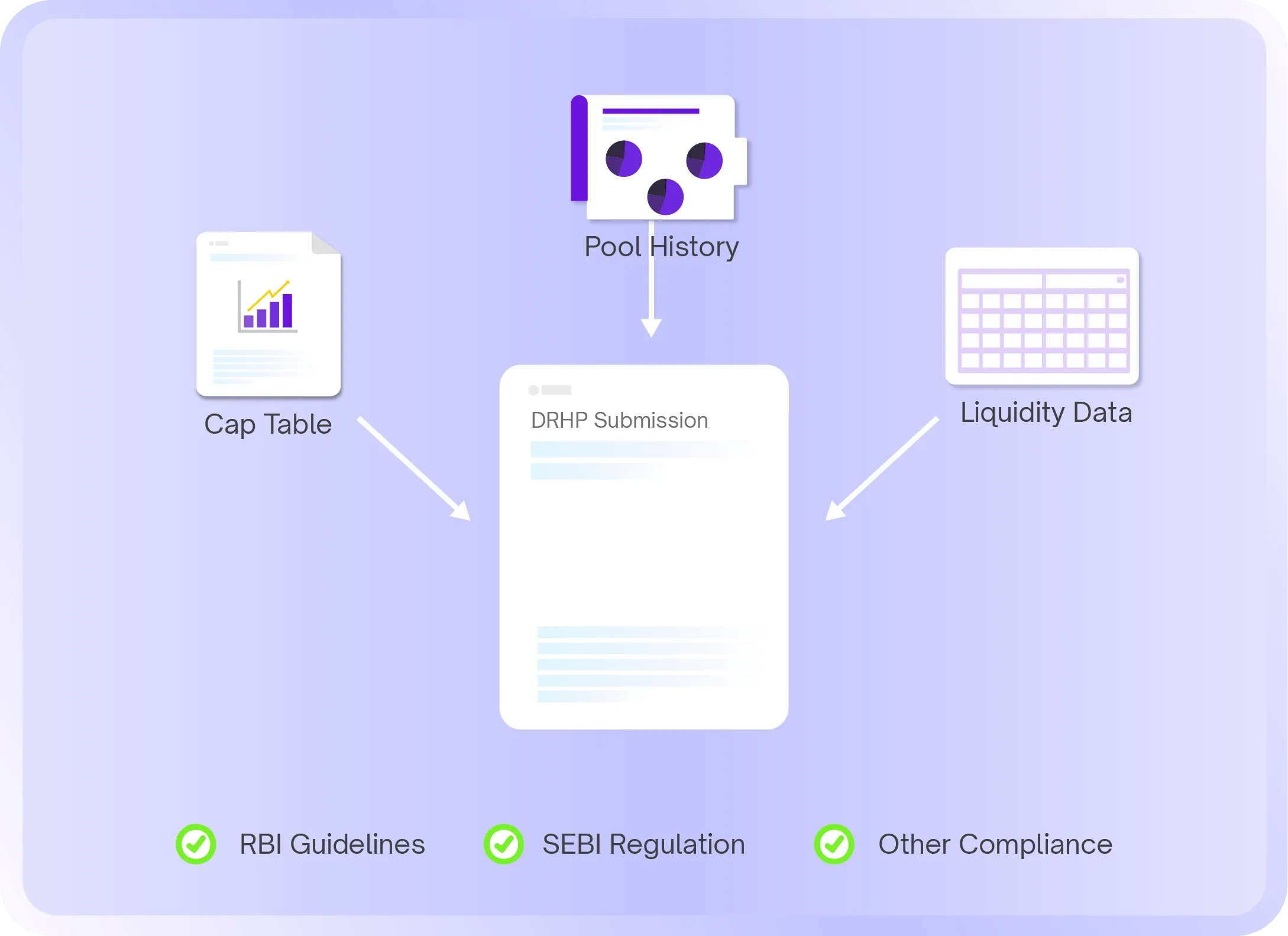
Documentation for DRHP & Investor Submissions

Cap Table, pool history, past liquidity. All in one place​

We help compile and present your equity history (grants, exercises, buybacks, secondaries, and pool movements) in formats required by bankers, law firms, and regulatory advisors. No scattered spreadsheets or missing signatures, just structured, accessible data.​
Employee Communication & Education

Prepare your team for the next chapter​

We support you in communicating the ESOP transition to your employees, including new vesting terms, lock-ins, exerciseschedules, and taxation changes. Through education sessions and guided dashboards, we help employees feel confident, not confused, during the IPO process.​
Testimonials

Words from our valued customers

They have extensive knowledge in this space. ESOP Direct guided us step by step through the entire process. We are particularly happy with their alacrity in responding to our queries!
Edward Tirtanata
CEO & Co-Founder, Kopi Kenangan
We are glad to have found a very competent consultant in ESOP Direct. A worthy partner to work with, is what I’d say.
Manhar Kapoor,
General Counsel & Company Secretary, Eicher Motors
ESOP Direct acted as Trustees for our employee stock option scheme. I am fully convinced we have made the right choice.
Umasree Parvathy
Chief Peoples Officer, Northern Arc
They worked alongside with us during the process great example of collaborative efforts to customize an employee stock option plan from scratch.
Yeoh Chen Chow
Co-Founder, MyFave
Their meticulous study and report gave us relevant data to take an informed decision. We are glad we engaged ESOP Direct.
Shailesh Singh
Head HR, Max Life Insurance
We entrusted our complete Plan administration function to ESOP Direct.I wish ESOP Direct greater success in the coming years.
Mona Cherian
President and Group Head HR, Thomas Cook
Qapita Works With Companies Across the Globe From Seed Stage to Listing and Beyond

Ensure Your ESOPs Are IPO-Ready From Day One

Build a SEBI-compliant, audit-proof ESOP framework for a seamless listing.
Testimonial

Lorem ipsum dolor sit amet consectetur

Lorem ipsum dolor sit amet consectetur, Lorem ipsum dolor sit amet consectetur, Lorem ipsum dolor sit amet consectetur
Metrics

Helping you elevate your equity management

Value of Options Under Administration
$10bn+
Assignments
1400+
Cumulative Years of Track Record
22+
Countries Served
60+
Global Employees Served
300,000+
Other Offerings

From IPO to ongoing success explore our full offerings

Valuations

Get full-spectrum, audit-grade valuations from in-house SEBI-Registered experts, built for Indian compliance.

ESOP Tax Guides

Simplify the entire tax journey, educating employees and streamlining finance team execution across all equity events.

ESOP Trust Formation and Trustee Services

Set up, govern, and operate SEBI- and Companies Act-compliant ESOP Trusts with confidence and strategic flexibility.
Integrations

Our Integrations

Lorem ipsum dolor sit amet consectetur. At ullamcorper luctus facilisi gravida turpis vel morbi mollis. Pharetra molestie at sed vulputate.
FAQs

Frequently asked questions

What does it mean to make an ESOP framework “IPO-ready”?

IPO readiness means aligning your ESOP structure, policies, documentation, and equity records with SEBI and stock exchange requirements so they withstand scrutiny during draft red herring prospectus (DRHP) filing, statutory due diligence, and listing processes. Qapita helps evaluate and revise your ESOP plans to meet IPO compliance standards.

What SEBI regulations govern ESOPs for companies planning an IPO?

For Indian companies preparing to list, employee stock options and share-basedschemes are regulated under the SEBI (Share Based Employee Benefits and Sweat Equity)Regulations, 2021, along with applicable LODR (Listing Obligations and DisclosureRequirements) guidelines once listed. ​​

How do ESOP policies change when a company goes public?

Once a company prepares for IPO, ESOP policies may need adjustments for eligibility, vesting schedules, disclosures, insider trading frameworks, and SEBI reporting requirements. Qapita guides these revisions and manages approvals and documentation. ​

Why is insider trading compliance important for IPO-bound companies?​

Post-IPO, companies must comply with SEBI’s PIT (Prohibition of Insider Trading) rules, including designating insiders, managing trading windows, and maintaining documentation. Preparing these policies early helps avoid regulatory issues after listing.  ​

How does Qapita ensure ESOP data is IPO- and audit-ready?

Qapita maintains a single system of record for all ESOP grants, exercises, cancellations, and transfers with complete audit trails. Every transaction is time-stamped, permission-controlled, and backed by board and shareholder approvals, ensuring your equity data is clean, traceable, and defensible during DRHP review and statutory audits.​

Can Qapita handle historical ESOP data migration before IPO filing?

Yes. Qapita supports structured migration of historical ESOP data from spreadsheets, legacy tools, or fragmented records. This includes validation of grant dates, vesting schedules, exercise prices, approvals, and employee mappings to eliminate inconsistencies before IPO diligence begins.​

Does Qapita provide DRHP-ready ESOP reports and disclosures?

Qapita enables generation of structured, DRHP-aligned ESOP reports covering outstanding options, exercised shares, lapsed grants, and employee equity pools. These reports are designed to support merchant banker queries, legal diligence, and regulatory disclosures without manual reconciliation.​

How does Qapita manage board and shareholder approvals for IPO preparation?​​

Qapita embeds approval workflows for ESOP grants, modifications, cancellations, and restructuring. Each action is mapped to board or shareholder consent, ensuring governance continuity and documented approvals required during IPO diligence.​

Can Qapita manage ESOP restructuring before an IPO?

Yes. Qapita supports ESOP restructuring scenarios such as plan amendments, option rollovers, vesting modifications, and conversion to listed-entity compliant formats. All changes are version-controlled and approval-backed to meet IPO scrutiny standards.

How does Qapita handle insider access and role-based controls?

Qapita offers granular role-based access controls to restrict sensitive equity data visibility. This supports insider governance requirements by ensuring that employees, administrators, auditors, and advisors only access information relevant to their role.​​

Is Qapita integrated with cap table and valuation workflows?

Qapita integrates ESOP data directly with cap table structures and valuation workflows, ensuring equity numbers remain consistent across IPO modeling, disclosures, and audit processes. This eliminates spreadsheet mismatches during diligence.​

How does Qapita ensure data accuracy during high-scrutiny IPO phases?

The platform enforces validation checks, approval dependencies, and historical integrity controls that prevent unauthorized or inconsistent equity changes. This ensures ESOP data remains stable and defensible during due diligence, audits, and regulator reviews.​

Can Qapita support post-IPO ESOP compliance and reporting?​

Yes. Qapita continues to support listed-entity ESOP management with audit trails,reporting, and compliance-ready records, enabling smooth transition from pre-IPOpreparation to post-listing governance without data rework.

Does Qapita support advisor and auditor collaboration during IPO?

Qapita allows controlled access for auditors, legal advisors, and merchant bankers, enabling faster diligence reviews without data exports or manual coordination.​
ESOP IPO Preparation 101

ESOP compliance and IPO readiness, the critical connection​

When a company prepares for an IPO, employee stock option plans (ESOPs) become one of the most scrutinized aspects of your capitalization structure. SEBI regulations require detailed ESOP disclosures in your Draft Red Herring Prospectus (DRHP), and any non-compliance discovered during the IPO process can delay listing or create significant compliance breaches during audits and funding rounds.

Unlike other pre-IPO obligations, ESOPs don't prevent you from going public. According to SEBI ICDR Regulations, outstanding ESOPs are not a hurdle for undertaking an IPO. However, this doesn't mean you can ignore them. Pre-IPO ESOP schemes must be ratified by shareholders post-listing and brought into full compliance with the SEBI (Share Based Employee Benefits and Sweat Equity) Regulations, 2021 before shares resulting from those options can be listed.​

How ESOPs are evaluated during IPO due diligence

During IPO due diligence, ESOPs are examined with the same rigor as promoter holdings and institutional shareholding. Regulators and advisors assess whether equity incentives have been granted, vested, and exercised in a compliant and traceable manner.​

Key areas of scrutiny include:​

  • Historical ESOP grants and board approvals​
  • Vesting schedules and exercised options​
  • Outstanding options and future dilution impact​
  • Consistency between ESOP data and cap table records​

Well-maintained ESOP records simplify due diligence and reduce follow-up queries during IPO preparation.​

Common ESOP gaps identified in pre-IPO companies

Many private companies begin IPO preparation with ESOP structures built for early-stage growth, not public-market governance. These gaps often surface late and require time-consuming clean-up.​

Common challenges include:​

  • Fragmented ESOP data across spreadsheets and legal files​
  • Missing or inconsistent grant documentation​
  • ESOP policies not aligned with SEBI expectations​
  • Incomplete audit trails for equity events​​

Identifying and addressing these gaps early helps companies move through IPO timelines with greater certainty​

Preparing employees for IPO linked ESOP outcomes

IPO preparation also requires clarity for employees holding stock options. Listing events introduce changes in taxation, liquidity, and disclosure obligations that need to be communicated early.​

Companies preparing for IPO should proactively address:​

  • ESOP taxation before and after listing​
  • Lock-in periods applicable to employee shareholders​
  • Exercise timelines and liquidity expectations​
  • Ongoing compliance responsibilities post-listing​

Clear communication helps manage expectations and reinforces trust during the transition to a listed entity.​

IPO specific requirements that impact your ESOP strategy

The IPO process introduces several unique ESOP-related requirements that companies often overlook during their pre-IPO planning phase. Your ESOP governance, valuation practices, and employee communication must all align with regulations designed specifically for public companies.

Mandatory ESOP disclosures in your DRHP​

SEBI requires detailed disclosures on ESOPs in DRHPs, which is crucial if you're planning an IPO. These disclosures must appear in Part C of Schedule I of the SEBI (Share Based Employee Benefits and Sweat Equity) Regulations, 2021, and include the following details: the number of options granted, vested, exercised, and lapsed; the exercise price and weighted average fair value of options; the dilution impact on EPS; identification of eligible employee classes; and the appraisal process for determining employee eligibility. Incomplete disclosure can trigger SEBI observations and delay your approval.

ESOP lock-in and listing requirements

Equity shares allotted to employees under an ESOP plan will be subject to lock-in provisions as specified in the SEBI (Share Based Employee Benefits and Sweat Equity) Regulations, 2021. Post-listing, ESOP shares arising from grants made before your IPO must be listed immediately upon exercise on all recognized stock exchanges where your shares are traded, subject to compliance with applicable regulations. However, these shares may continue to remain subject to any lock-in requirements applicable under regulatory provisions or as disclosed in the Company’s offer document.

Tax transparency and employee communication

Employees exercising ESOPs post-IPO face a two-stage tax structure: taxation as a perquisite at exercise (based on the Fair Market Value of shares on allotment date minus the exercise price), and capital gains taxation when shares are sold. Listed company status changes the FMV calculation mechanism for listed companies, FMV is determined by the closing stock price on recognized exchanges, not by independent valuation reports. This shift can significantly impact the tax liability your employees face, and your IPO documentation must explain this clearly to avoid employee disputes and negative press​.

Make Your ESOP Framework IPO-Ready and Compliant

Establish clean records and robust SEBI-compliant policies for a confident public market debut.